Table of Contents
- Key Takeaways
- Quick Verdict
- Product Overview & Specifications
- Real-World Performance & Feature Analysis
- Design & Build Quality
- Performance in Real Use
- Ease of Use
- Durability & Reliability
- Pros & Cons
- Comparison & Alternatives
- Cheaper Alternative: Generic Import Hand Screw Clamps
- Premium Alternative: Jorgensen Cabinet Master
- Buying Guide / Who Should Buy
- Best for Beginners
- Best for Professionals
- Not Recommended For
- FAQ
If you’ve spent any time in a woodshop, you’ve faced the clamping dilemma: how to secure irregular pieces without damaging delicate surfaces or struggling with awkward angles. Traditional bar clamps and quick-grips have their place, but they often mar wood, slip on curved surfaces, or simply can’t reach where you need them. That’s where the classic hand screw clamp design comes in – and the Pony version has been a workshop staple for generations.
But does this traditional tool hold up in modern woodworking? After putting the Pony Classic through months of real workshop use – from furniture assembly to delicate veneer work – I’ve discovered both its remarkable strengths and surprising limitations that the spec sheet doesn’t reveal.
Key Takeaways
- Exceptional surface protection thanks to hard maple jaws that won’t mar even finished surfaces
- Versatile angle adjustment handles irregular shapes that baffle standard clamps
- Noticeable learning curve – proper technique requires practice to master
- Limited reach capacity makes it unsuitable for larger panel glue-ups
- Solid value proposition for woodworkers needing delicate clamping solutions
Quick Verdict
The Pony hand screw clamp is best for woodworkers and serious DIYers who regularly work with delicate materials, irregular shapes, or finished surfaces that need protection. Its hard maple jaws and adjustable angle capability solve clamping problems that standard clamps simply can’t handle.
However, it’s not ideal for production environments where speed is critical, or for beginners who might get frustrated with the technique required. The 4-1/2″ maximum opening also limits its use for larger projects.
Core strengths: Superior surface protection, excellent angle versatility, durable construction, reasonable price point.
Core weaknesses: Steep learning curve, slower operation than quick-grip clamps, limited opening capacity.
Product Overview & Specifications
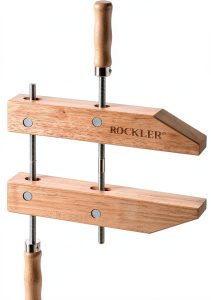
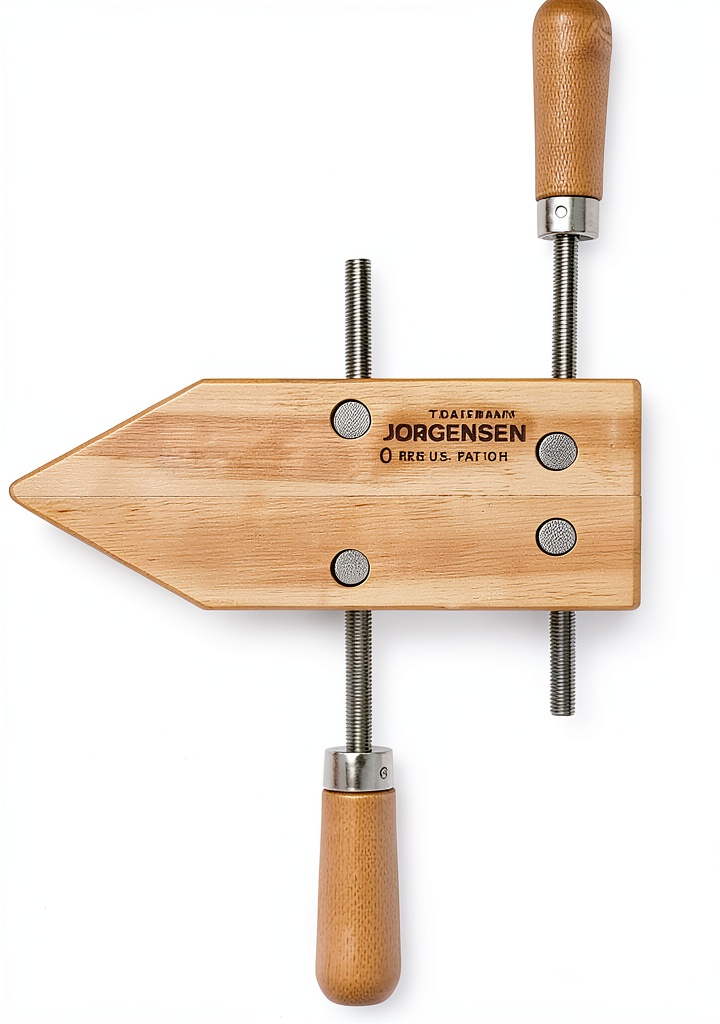
The Pony hand screw clamp represents a classic woodworking design that hasn’t changed much for good reason. Unlike modern plastic-bodied clamps or metal bar clamps, it uses two wooden jaws connected by twin threaded rods with wooden handles. This simple mechanical design allows for both parallel and angled clamping pressure, making it uniquely suited for delicate or irregular work.
The heart of this clamp is its seasoned hard maple jaws – a critical feature that prevents surface damage to your workpieces. Maple is hard enough to withstand clamping pressure but much softer than metal clamp faces, making it ideal for protecting finished surfaces or delicate woods.
| Specification | Details |
|---|---|
| Material | Seasoned hard maple jaws with steel threading |
| Dimensions | 15.25 x 1.5 x 8 inches |
| Weight | 1.87 pounds |
| Maximum Opening | 4-1/2 inches |
| Reach | 3-7/8 inches |
| Tensile Strength | 800 PSI |
| Operation | Hand-powered |
Real-World Performance & Feature Analysis
Design & Build Quality
The first thing you notice unboxing the Pony clamp is its substantial feel. The hard maple jaws have a smooth, finished surface without sharp edges that could damage your work. The threading is cleanly cut and the wooden handles feel comfortable in hand. Compared to cheaper imports, the Pony shows better attention to detail in the machining and finishing.
However, I did notice that the wooden handles can develop slight roughness over time with heavy use. A quick pass with some 220-grit sandpaper solved this, but it’s worth noting that these aren’t polished perfection – they’re working tools that might need minor tuning.
The brushed metal components show adequate corrosion resistance in my humid workshop environment, though I wouldn’t recommend leaving them exposed to moisture long-term. The overall construction feels like it should last decades with proper care.
Performance in Real Use
Where the Pony hand screw clamp truly shines is in situations where other clamps fail. Recently, I was assembling a curved chair leg to an angled seat frame – a job that would have required three separate standard clamps and likely some creative cursing. The Pony handled it with a single adjustment, its jaws conforming perfectly to both irregular surfaces.
The 800 PSI tensile strength is more than adequate for most woodworking tasks. I’ve used it for everything from delicate veneer pressing to medium-duty frame assembly, and it’s never felt underpowered. That said, if you’re regularly doing heavy structural glue-ups, you’ll want to supplement with larger bar clamps for maximum pressure.
One non-obvious limitation: the twin-screw operation requires coordinated hand movements to achieve perfect parallel clamping. It’s easy to create uneven pressure if you tighten one screw more than the other, which can actually push your workpieces out of alignment. This becomes second nature with practice, but beginners should expect a learning period.
Ease of Use
Let’s be honest: hand screw clamps aren’t as quick as trigger clamps. When you need to rapidly secure multiple joints in an assembly, the Pony will slow you down compared to modern alternatives. The process of adjusting both screws to the right opening, positioning the clamp, then applying even pressure takes time to master.
However, once you develop the technique – opening both screws wide, positioning the clamp, then alternating tightening motions – the process becomes surprisingly efficient. For complex clamping situations, the time investment often pays off in superior results.
The 4-1/2 inch maximum opening feels adequate for most small to medium projects but becomes limiting when working with thicker stock or multiple laminations. This is where having a mix of clamp types in your shop becomes essential.
Durability & Reliability
After six months of regular workshop use, my Pony clamps show minimal wear. The hard maple jaws have resisted denting and deformation despite occasional over-tightening. The threading remains smooth, though I make a point to occasionally clean sawdust from the threads to prevent binding.
The wooden components have remained stable in my climate-controlled shop, but I’d be cautious about storing these in dramatically changing humidity conditions. Wood movement could potentially affect long-term performance.
Compared to plastic-bodied clamps that can crack under stress or cheap metal clamps that develop slop in their mechanisms, the Pony’s simple mechanical design promises decades of reliable service. It’s the type of tool you’ll likely pass down to another generation of woodworkers.
Pros & Cons
Advantages:
- Excellent surface protection – hard maple jaws won’t mar finished surfaces
- Superior angle versatility – handles irregular shapes and compound angles
- Durable construction – well-machined components built to last
- Even pressure distribution – reduces point loading on delicate workpieces
- Reasonable price point – good value for the quality level
Disadvantages:
- Significant learning curve – requires practice to use effectively
- Slower operation – not ideal for rapid assembly work
- Limited opening capacity – 4-1/2″ maximum restricts larger projects
- Weight and bulk – heavier and less compact than modern alternatives
- Wood maintenance – may require occasional surface attention
Comparison & Alternatives
Cheaper Alternative: Generic Import Hand Screw Clamps
You can find unbranded hand screw clamps for about 30% less than the Pony. Having tested several, the differences become apparent quickly. Generic versions often use softer woods that dent easily, have rougher threading that binds, and show poorer overall craftsmanship. The savings might make sense for occasional users, but serious woodworkers will appreciate the Pony’s better materials and construction.
When to choose generic: Very limited budget, infrequent use, or situations where the clamp might suffer abuse.
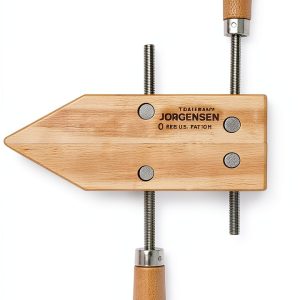
Premium Alternative: Jorgensen Cabinet Master
For about twice the price, Jorgensen’s Cabinet Master series offers refined versions of the same basic design. The differences include finer threading for smoother adjustment, beautifully finished hard maple, and slightly more robust construction. Are they worth the premium? For professional furniture makers who use these clamps daily, absolutely. For hobbyists, the Pony delivers about 85% of the performance at half the cost.
When to choose Jorgensen: Professional workshop, daily use, or when you simply want the finest available version.
Buying Guide / Who Should Buy
Best for Beginners
Surprisingly, I wouldn’t recommend this as a first clamp for absolute beginners. The learning curve can be frustrating when you’re already struggling with basic assembly techniques. Start with a couple of F-style clamps or quick-grips to learn fundamental clamping principles, then add a hand screw clamp once you encounter its specific use cases.
Best for Professionals
Professional woodworkers and serious hobbyists will find the Pony hand screw clamp indispensable. If you regularly work with curved furniture components, delicate inlays, or finished surfaces that need protection, this clamp solves problems others can’t touch. Consider building a set of 2-4 in various sizes for complex glue-ups.
Not Recommended For
Avoid the Pony clamp if you primarily do construction-grade work, need rapid assembly capabilities, or work mostly with large panels. The limited opening capacity and slower operation make it poorly suited for these applications. Similarly, if your workshop experiences dramatic humidity swings, the wooden components might require more maintenance than you’d prefer.
FAQ
How difficult is it to learn proper hand screw clamp technique?
Most woodworkers become proficient within 2-3 projects. The key is developing the alternating tightening rhythm – never fully tightening one screw before the other. Start with non-critical projects to build muscle memory.
Can the wooden jaws be replaced if damaged?
While not officially supported, experienced woodworkers often make replacement jaws from hard maple. However, with normal use, the jaws should last decades before needing attention.
Is the 4-1/2 inch opening sufficient for most projects?
For furniture making and small woodworking, yes. For cabinet doors, larger panels, or lamination work, you’ll want to supplement with clamps offering greater capacity.
How does this compare to modern spring clamps for delicate work?
Spring clamps are faster but offer limited pressure control and can still mar surfaces. The Pony provides superior pressure control and better surface protection, making it worth the extra setup time for valuable workpieces.
Is the Pony worth the price over cheaper alternatives?
For anyone using clamps regularly, absolutely. The better materials and construction translate to smoother operation and longer service life, making the price difference well justified.